Reading and
writing neural
activity, one cell at a time.
I build holographic two-photon microscopes that image a cortical population while exciting and suppressing individually chosen neurons within it.
click a cell to target it — switch opsin to change what the spot does
About
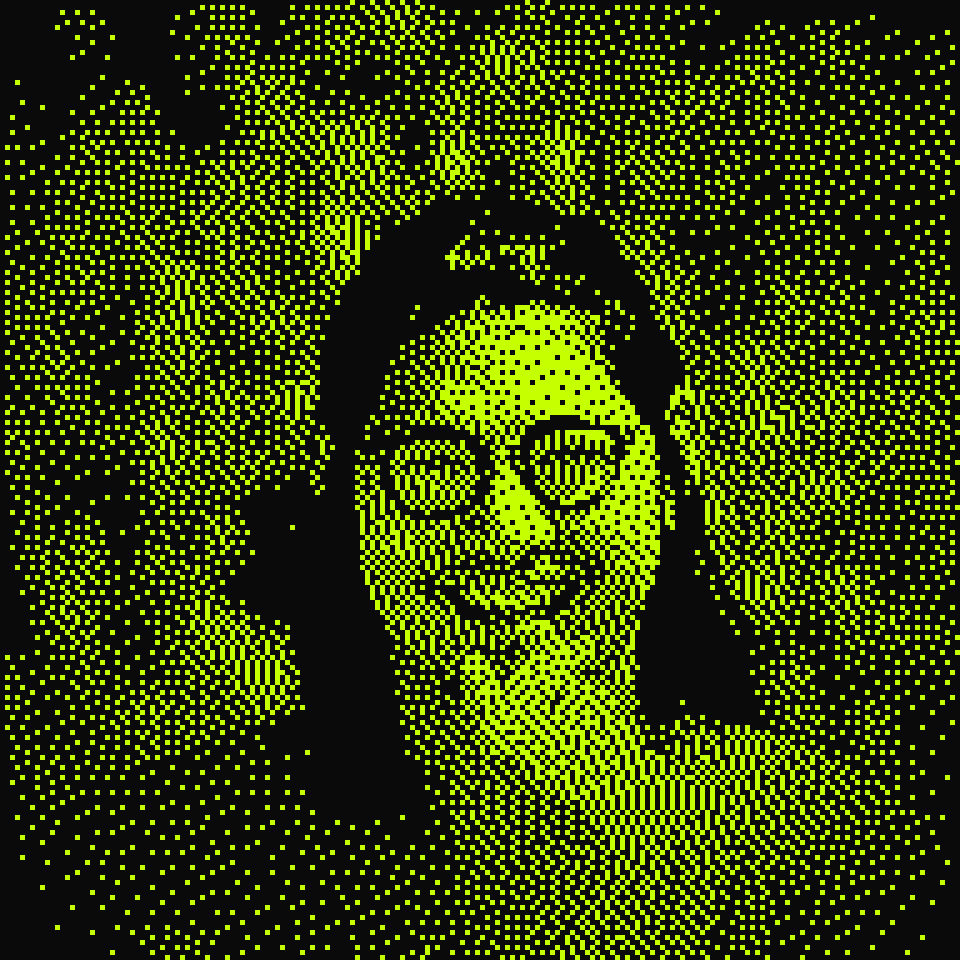
I'm Kevin, a postdoctoral fellow in the Adesnik Lab at the University of California, Berkeley, where I develop new optical methods for reading and writing neural activity at previously inaccessible scales. My work sits at the intersection of engineering, programming, and neuroscience: I build tools, most recently a multicolor holographic two-photon microscope, to test how specific neurons and ensembles give rise to cortical computation and perception.
I earned my Ph.D. in Neuroscience at UC Santa Barbara as the founding member of the Goard Lab. There I used two-photon calcium imaging to study how the mouse visual cortex represents motion, and how visual landmarks anchor the brain's internal compass during spatial navigation. Before that, I received my B.S. in Physiology and Neuroscience from UC San Diego.
My long-term goal is to take a reverse-engineering approach to fundamental questions in systems neuroscience, and ultimately to lead my own lab. I'm a strong believer in open science, and I share the tools and techniques I develop along the way.
Papers
current threads
-
Bidirectional holographic optogenetics
I designed, built, and tested a multicolor holographic two-photon microscope, the first of its kind, that can simultaneously excite and suppress hundreds of individually targeted neurons while imaging the same population. By independently tuning excitatory and inhibitory drive at single-cell resolution, it lets us test the necessity and sufficiency of specific neurons in cortical computation. I'm using it to show that the quenching of neural variability at stimulus onset arises from an intrinsic property of the cell, and to probe the surprising symmetry of patterned manipulations.
Ongoing
-
Inhibitory circuits and contextual processing
Surround suppression is a fundamental cortical computation. Using two-photon holographic optogenetics to probe somatostatin interneurons, we found that SST and excitatory neurons form a like-to-like, co-tuned connectivity pattern, and that manipulating these co-tuned cells shapes visual processing, clarifying how feature-specific inhibition sharpens cortical representations.
Ongoing
peer-reviewed
-
Coregistration of heading to visual cues in retrosplenial cortex
Using two-photon calcium imaging, we show that visual information alone is sufficient to drive the brain's internal compass in head-fixed mice, independent of physical head movement. We characterized feedforward projections from anterodorsal thalamus and visual cortex into retrosplenial cortex and identified a population of RSC neurons that combine both signals, the first direct neural evidence for the integration of visual and heading information, and proposed a simple circuit model for how the compass locks onto external landmarks.
Nature Communications 14, 1992 (2023)
-
Retinoic acid inhibitors mitigate vision loss in a mouse model of retinal degeneration
Science Advances 8, eabm4643 (2022)
*co-first author · †co-last author -
Automated classification of estrous stage using deep learning
Scientific Reports 12, 17685 (2022)
-
Long-term transverse imaging of the hippocampus with glass microperiscopes
eLife 11, e75391 (2022)
-
Distributed and retinotopically asymmetric processing of coherent motion in mouse visual cortex
Adapting random dot kinematograms, a stimulus commonly used in primates, for mice, we mapped how coherent motion is represented across the visual cortex. We found heterogeneity in motion responsiveness across and within higher visual areas, but far less distinction between areas than in primates, supporting the view that mouse visual cortex is less modular and more interconnected. We also found a visual-elevation-dependent gradient in which neurons representing the inferior visual field respond more strongly to coherent motion, potentially an optimization driven by natural scene statistics.
Nature Communications 11, 3565 (2020)
in revision and in preparation
-
Feature-specific inhibitory connectivity augments the accuracy of cortical representations
In revision, Nature
-
Precise bidirectional holographic optogenetic control of neural ensemble activity
In preparation
-
Shunting conductance at stimulus onset quenches neuronal variability
In preparation
-
A modular, cost-effective solution for automated training of mice for head-fixed behaviors
In preparation
selected presentations
-
Balanced two-photon holographic optogenetics defines the mechanism for stimulus quenching of neural variability
Contributed talk, Cosyne 2025
Nanosymposium, Society for Neuroscience 2025
Tools
-
Multicolor holographic two-photon microscope
Instrument · in use
A two-photon system with two independently steered holographic write paths, so excitatory and inhibitory opsins can be driven on separate cell sets while a third path images the population. Hardware, alignment procedures, and control software.
-
Autobehavior
Released
A modular, low-cost rig for automated training of head-fixed mice. Animals train themselves on a schedule, freeing experimenter time and standardizing behavior across cohorts. Paper in preparation with Nigel Bess and Michael Goard.
-
Analysis code from the papers
Released
Pipelines for the retrosplenial heading work and the coherent-motion mapping, written in MATLAB and Python. Ask and I'll point you to the right repository.
Contact
Happy to talk science, tools, or a copy of the CV.